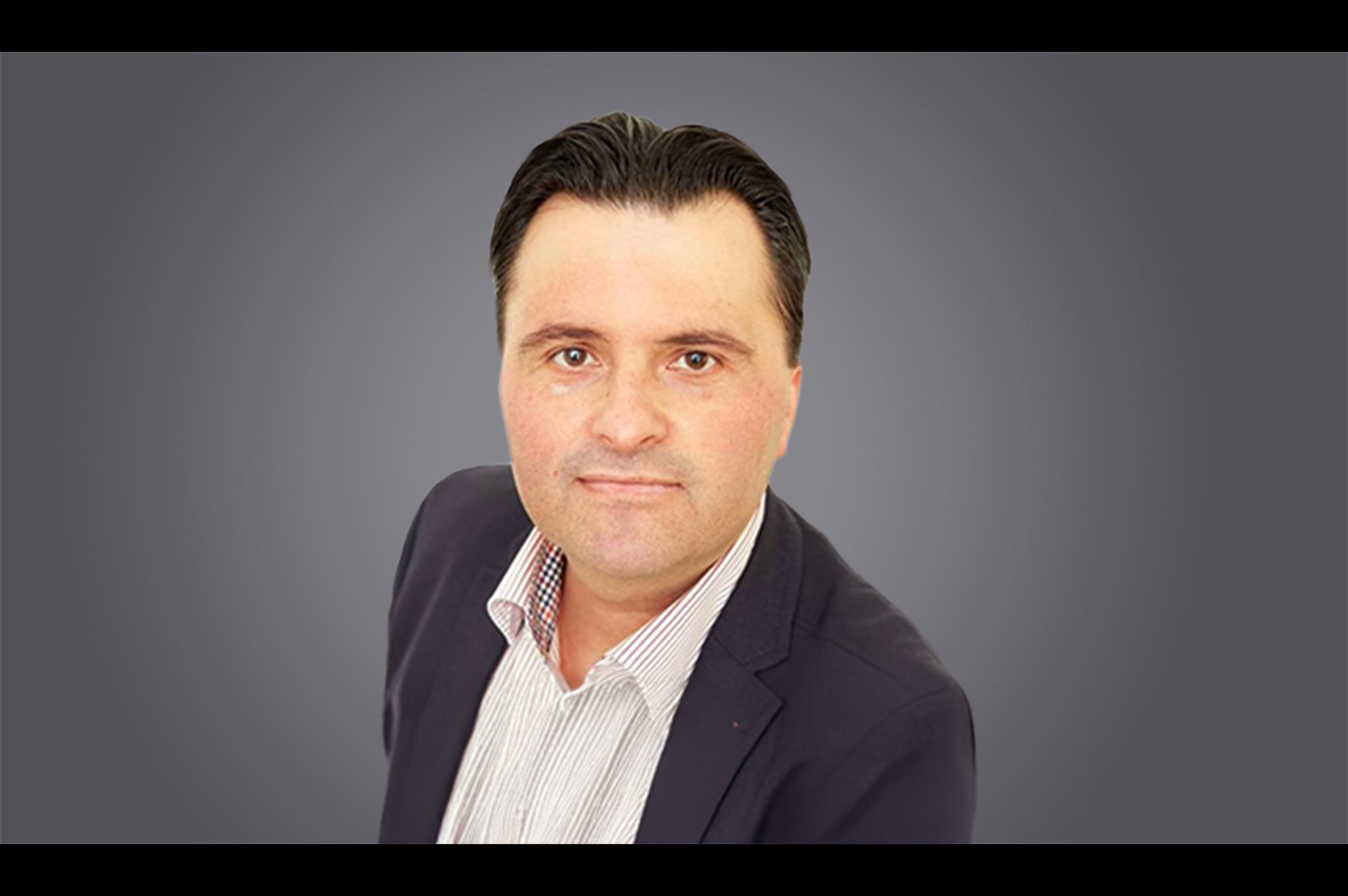
Interview: Slavco Velickov, Global Advancement Director for Water Infrastructure, Bentley Systems

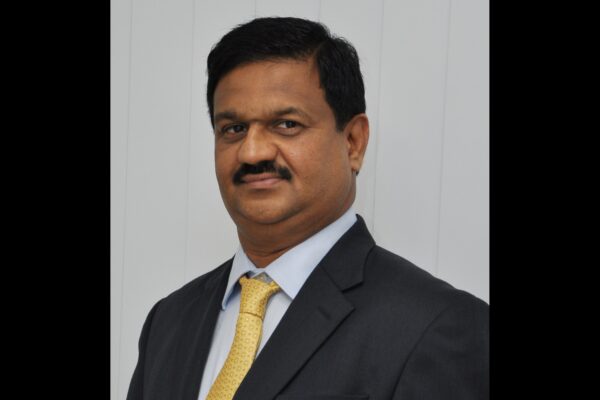
At the Bentley Year in Infrastructure 2025 event, in an exclusive conversation with Tejasvi Sharma, Editor-in-Chief of EPC World, Slavco Velickov, Global Advancement Director for Water Infrastructure at Bentley Systems, outlined how open data, true interoperability, and discipline-specific AI are redefining water networks, strengthening climate resilience, and shaping the next generation of sustainable cities
How is Bentley leveraging open data, interoperability, and AI to transform the way infrastructure is designed and delivered?
To make infrastructure truly resilient – and capable of managing uncertainty for generations – we are building everything on a foundation of open data. That is the first and most important principle. Interoperability is equally critical. No matter which software ecosystem an organization uses, an interoperable platform ensures seamless data exchange across applications—creating a connected environment that supports collaboration and efficiency. There is no vendor lock-in; the system remains open and connected. For example, our interoperable platform – powered by Bentley Infrastructure Cloud – is a foundational layer, and now we are embedding AI across all applications. This includes co-pilot capabilities, smarter design automation, optioneering, and large language model–based insights. But what matters most is contextual AI – not generic algorithms, but AI trained on discipline-specific knowledge. A site designer needs site-design intelligence; a structural engineer needs structural design expertise; water professionals need water domain insights, and so on. This combination of open data, open applications, true interoperability, and domain-specific AI is how we are redefining infrastructure delivery in the AI era.
How does Bentley envision the balance between automation and human expertise in future infrastructure projects?
There is a lot of discussion today about whether AI will replace engineers, especially because it can evaluate thousands of scenarios and optimise designs at incredible speed. At Bentley, our approach is centred on trustworthy AI. This means the data used to train AI models always remains under the user’s control. If a customer wants to train the system using data from their past projects, we enable it. If they choose to share certain datasets with industry partners to enhance model performance, that is also fully supported – but always at their discretion. Equally important is keeping the human engineer in the loop. AI can rapidly generate design options – for example, automatically laying out a parking area or evaluating water and wastewater networks across tens of thousands of scenarios in minutes. But the final decision must always rest with the engineer. Only a qualified professional can certify that a design meets ISO standards, regulatory requirements, and health and safety norms. So, our philosophy is clear: AI is a powerful productivity tool that enhances the design process, but the responsibility and final approval will always belong to human experts.
How exactly are you training the AI prompts to deliver context-specific responses?
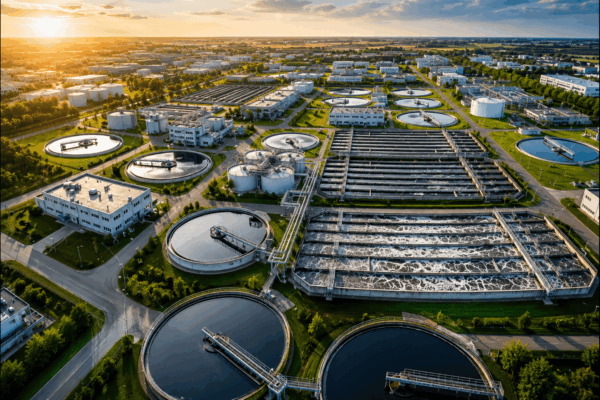
That’s exactly why I emphasise trustworthy and contextual AI. When you’re working on a site design – whether it’s a water treatment plant, a wastewater facility, or a greenfield project – the workflow involves many specialised steps: clearing the site, reviewing geotechnical data, designing foundations, conducting mechanical, structural, hydraulic and geotechnical analyses, and eventually moving into construction and operations. Our AI is trained specifically on these kinds of real-world engineering workflows. It learns from users’ own project data – always with their full consent – and from Bentley’s extensive infrastructure library. This ensures the prompts and outputs are contextually relevant to each discipline. We also leverage our rich internal knowledge base: documentation, technical support archives, and thousands of resolved engineering queries. Feeding this domain-specific information into large language models enables the AI to deliver precise answers instantly, instead of engineers having to search through manuals or technical guides. It’s far more efficient and keeps the focus on engineering decision-making rather than administrative effort. Just an example, AI-driven site design tools, like Bentley OpenSite+, are redefining productivity in infrastructure planning. By automating complex workflows and integrating real-time data, these solutions enable teams to complete tasks up to 10 times faster than traditional methods. This means less time spent on manual processes and more time focused on optimizing designs for safety, sustainability, and cost efficiency.
What are the biggest technological shifts you foresee reshaping project delivery by 2030?
There are a few major trends already shaping the future. By 2030, a significant share of the population will be concentrated in urban areas – cities like Delhi and Hyderabad are expected to reach 60–62% urbanisation. This rapid urban growth will put enormous pressure on infrastructure systems. Water demand is another critical challenge. By 2030, demand is projected to double or even triple in many regions, which will force us to rethink how we plan, design, and deliver water-related infrastructure. To respond to these pressures, the biggest technological shift will be the move towards a fully connected ‘data thread’- what we call a connected data environment. This means using the same data and the same models across every phase of the project lifecycle. It starts at the planning stage – functional planning, multidisciplinary planning, feasibility studies – and continues seamlessly into detailed design. Our Bentley Infrastructure Cloud and the suite of ‘Open’ applications (OpenFlows, OpenPlant, OpenBuildings, OpenRoads, OpenSite+, and others) enable true multidisciplinary collaboration using a consistent data model.
From there, projects move into construction using SYNCHRO 4D, or our recently announced SYNCHRO+, for construction management, as-built models, and progress tracking, and finally into operations and maintenance. The same data then carries through to the decommissioning phase. This end-to-end continuity is a major differentiator. While some companies focus only on design, and others specialise in operations and IoT-driven monitoring, Bentley’s unique value proposition is a unified lifecycle approach powered by a single, connected data thread. As highlighted in today’s announcement of Bentley Infrastructure Cloud Connect, this platform ensures seamless interoperability behind the scenes – users don’t see it, but the applications are continuously taking care of the data connectivity. This full-lifecycle, data-driven approach is what will truly reshape project delivery by 2030.
How have Bentley’s iTwin and iModel advancements this year improved real-time decision-making in infrastructure analysis?
The iTwin platform has evolved significantly this year, and its components now work together to transform real-time decision-making. It starts with iTwin Capture, which enables reality capture. If you don’t have an existing digital model of a building, bridge, or water treatment plant, you can create one through high-precision scanning and imagery. The next layer is iTwin IoT, where we integrate sensors directly with the digital model. These include vibration and acceleration sensors, traffic counters, geotechnical instruments, and water-level monitors. Once connected, the physical asset continuously streams real-time data into the digital twin. Finally, we have iTwin Experience, which brings analytics and visualisation together. Engineers can view dashboards that show structural behaviour, vibration thresholds, or crack locations on a bridge – automatically detected through AI. It also supports automated work-order creation, issue detection, and predictive maintenance workflows. These advancements move us well beyond design and construction into real-time operational intelligence. In the water sector, for example, WaterSight monitors entire water networks in real time. It detects leaks, pump failures, abnormal events, and can even calculate energy use and carbon footprint. In wastewater, WaterSight for sewer systems performs similar functions – Brihanmumbai Municipal Corporation (BMC) is already using it to optimise pumping operations in real time. The iTwin platform today is not just a modelling environment – it is enabling live, data-driven insights and real-time digital twins that significantly improve infrastructure analysis and decision-making.
How are your open APIs enhancing interoperability with Autodesk, ESRI, and other global platforms?Interoperability has been part of Bentley’s DNA since the company was founded in 1984. The Bentley brothers always emphasised that our platforms must remain open. For example, MicroStation can natively open and save Autodesk AutoCAD files – both DGN and DWG -without any conversions. That’s true interoperability. The same philosophy extends to the iTwin platform. iTwin Models serve as intelligent, vendor-neutral digital representations of infrastructure. If you are working in Autodesk Civil 3D or Revit and saving your work through Bentley Infrastructure Cloud, the files are automatically converted into an iTwin model in the background. The advantage is that iTwin can then be used across multiple environments. Third-party applications from other vendors can work with iTwin models, and they can also be referenced directly in geospatial applications like Esri city models. This ensures seamless collaboration across different ecosystems. Engineering firms and owner–operators appreciate this openness—companies like Tata Consulting Engineers, L&T, Systra, GHD, and AECOM value the fact that they are not locked into a single vendor. Our open APIs and connected data environment give them the flexibility to use the best tools while maintaining a unified digital workflow.
How can your technology help cities address challenges like flooding, climate resilience, and emergency preparedness?
Our technology supports clients in multiple ways, starting with reducing water losses and leakages – one of the biggest challenges for utilities today. India, for instance, faces extremely high non-revenue water levels, often ranging from 35–50 percent, and in some areas even 60–70 percent. Instead of investing in new treatment plants or sourcing additional water, the most sustainable approach is to fix leaks. Our solutions help utilities do exactly that. Using water balance analysis, sensor deployment, and leakage detection tools, we identify high-loss zones, prioritise repairs, and help utilities restore system efficiency.
The second major area where we add value is in climate resilience and flood modelling. Through our OpenFlows modelling suite, combined with Reality Modelling and Cesium’s geospatial capabilities, we create highly accurate 3D terrain models for any region in India. This can be done using drone imagery—or even free stereo satellite data from sources like NOAA or Indian government satellite programmes. Planet Labs data can further enhance the resolution. Once the terrain is generated, we simulate various rainfall and storm scenarios -events that have occurred in the past as well as probable future events such as 1-in-10, 1-in-20, 1-in-50, or 1-in-100-year storms. Our hydrodynamic 2D models calculate how water will flow, the velocity, the depth, and the areas likely to be inundated. We also overlay this with critical infrastructure—hospitals, substations, defence areas, and key businesses – to accurately assess risk and hazards. Based on these insights, we recommend targeted mitigation and adaptation strategies. These may include new stormwater canals, small retention dams, underground storage tunnels (similar to major systems built in Dubai or under the River Thames in the UK), or improved drainage. And where engineering solutions are limited, we support early-warning systems to help communities respond quickly – moving vehicles, protecting assets, and relocating to safer zones. In essence, our technology empowers cities and utilities to reduce losses, strengthen resilience, and build safer, more sustainable infrastructure.
What role does AI play in accelerating the global transition towards net-zero infrastructure?
AI plays an increasingly central role in helping organisations move towards net-zero infrastructure. Over the past year, we have focused heavily on sustainability-driven capabilities, because nearly every organisation today has a clear mission around reducing carbon and improving environmental performance. One of our key advancements is the Carbon Analysis capability within the iTwin platform. When engineers design a new bridge, flood-alleviation scheme, or water asset, the system calculates the embodied carbon associated with materials – such as steel, concrete, and construction activities. AI then evaluates different design options and recommends alternatives that minimise the overall carbon footprint. This ensures sustainability is embedded right from the design stage.
The second critical area is operations. Once an asset – say a wastewater treatment plant or pumping station – is built, our monitoring and optimisation tools track real-time asset performance. For example, if a pump consumes 200 kWh per day, the system can calculate the corresponding carbon emissions and then use AI-based optimisation to adjust set points and reduce energy consumption without compromising service delivery. These operational efficiencies significantly cut lifetime emissions.
Achieving net zero requires a broader ecosystem approach. Many countries are also transitioning to electric fleets, upgrading to LED lighting, and integrating renewable energy sources. Our tools complement these efforts by ensuring both design and operational decisions are carbon-optimised. A major leap this year is the evolution of our iLab into an AI-driven immersive digital-twin environment. Unlike earlier digital twins, today’s immersive models allow users to step inside the asset digitally, interact with components via gestures, and run complex emergency or worst-case scenarios – such as floods, failures, or evacuation planning – without touching the physical infrastructure. This dramatically improves preparedness, operational insight, and sustainability planning. Through these innovations – carbon-aware design, real-time optimisation, and immersive simulation – AI is helping infrastructure owners worldwide move meaningfully closer to their net-zero goals.
Are there any new alliances emerging around AI, sustainability, or data governance?
We continue to strengthen our ecosystem through several strategic alliances. One of the most important is with the Open Geospatial Consortium, which aligns closely with our commitment to open data and interoperability. This year, we also expanded our strategic partnership with Google. Through our integration with Cesium, Google’s data, insights, and high-resolution tiles are now incorporated directly into our digital twins, significantly enhancing geospatial accuracy and real-world context. These collaborations, and others, underscore a shared vision to create an open, connected ecosystem where data flows seamlessly across platforms, enabling organizations to deliver more accurate, sustainable, and resilient infrastructure solutions worldwide.
If you had to describe the future of infrastructure in one word, what would it be?
That’s an interesting question. If I had to choose just one word, I would say resilient. But the future of infrastructure will truly be resilient, intelligent, and adaptive.
Tags