How Electric Forklifts are Redefining High-Capacity Material Handling

by Faraz Alam, Founder, Atmos Systems
The global warehouse floor is no longer a passive storage zone; it has evolved into a strategic battleground where speed, sustainability, and operational resilience determine competitive advantage. Quietly but decisively, this shift is transforming one of the most fundamental pillars of industrial operations: material handling. Valued at $85.2 billion in 2024 and projected to reach $125.4 billion by 2030, the global forklift market is expanding at a pace that signals far more than routine equipment upgrades. It reflects a structural re-engineering of how goods move through the modern economy.
This transformation is being driven by converging pressures. Explosive growth in e-commerce, increasingly fragmented global supply chains, and intensifying regulatory scrutiny are forcing warehouses, ports, and factories to achieve what once seemed contradictory objectives: move heavier volumes faster, operate continuously, and dramatically reduce emissions. These demands are exposing the limitations of legacy internal combustion (IC) equipment that long defined high-capacity material handling. In response, electric forklifts, powered by advances in drivetrain technology, battery chemistry, and digital intelligence, are emerging not as alternatives, but as the new operational default.
Breaking the Power Barrier
Across industrial environments, throughput expectations are rising sharply. Distribution centres must sustain near-constant operations to support same-day and next-day delivery models. Ports and container terminals are handling larger, denser cargo flows with minimal tolerance for delays. Manufacturing facilities, driven by just-in-time production, are optimising for leaner cycles where even brief downtime can ripple across the value chain.
Historically, high-capacity material handling, particularly for loads exceeding 10,000 lbs, was dominated by diesel and LPG forklifts. Their perceived advantages in torque, endurance, and rapid refuelling made them indispensable for heavy-duty tasks. However, this long-held assumption is being dismantled as electric technology rapidly closes, and in many cases surpasses, the performance gap.
For decades, the central objection to electric forklifts in high-capacity applications was power. Industry consensus held that electric motors lacked the raw “grunt” required for heavy lifting and continuous operation. That paradigm has now shifted decisively. The forklift industry is increasingly moving away from noisy, high-emission diesel engines in favour of sophisticated electric systems. Electric forklifts, powered by clean energy and intelligent control technologies, are steadily displacing internal combustion machines across industrial sectors. This transition extends well beyond environmental considerations. It represents a strategic shift in how organisations approach operational efficiency, safety, and cost management.
With lower total ownership costs, superior manoeuvrability in confined indoor environments, and zero tailpipe emissions, electric forklifts are aligning the priorities of warehouse operators and sustainability leaders alike, cementing their role as the new standard in modern material handling.
Electric Forklift Powering High-Capacity Material Handling
When it comes to high-capacity lifting, the earlier concern was whether electric forklifts could match the performance of diesel machines. Today, that gap has been bridged. Lithium-ion battery technology delivers higher energy density, rapid charging, and consistent power output, ensuring uninterrupted operations. For even heavier workloads, hydrogen fuel cell solutions are being tested in ports and large-scale logistics hubs.
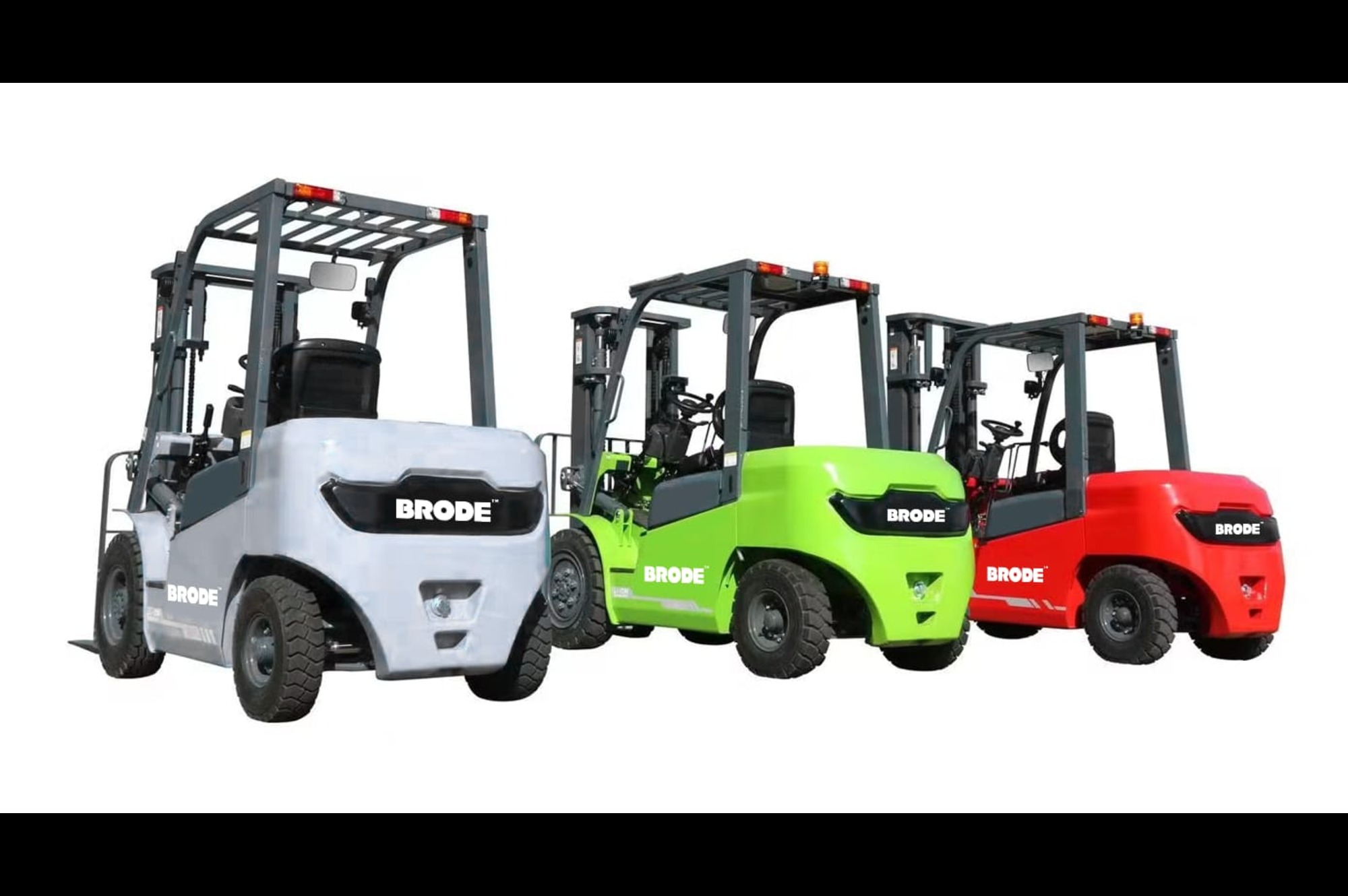
Atmos Systems has specifically addressed this with its electric forklift brand, “BRODE”. Designed with robust engineering and advanced lithium-ion technology, BRODE forklifts deliver exceptional lifting performance, longer runtime, faster charging, and high reliability, making them a strong choice for demanding, high-capacity applications.
Power consistency is equally important. Earlier lead-acid batteries suffered from voltage drop as charge levels declined, leading to noticeable performance degradation across a shift. With high-performance lithium-ion technology at its core, BRODE forklifts ensure consistent power delivery, faster charging, and longer runtime for uninterrupted operations in demanding, multi-shift applications.
Beyond performance, electric forklifts deliver a compelling economic advantage. BRODE’s fewer moving parts and advanced battery technology translate into lower maintenance requirements and higher uptime. The result is reduced maintenance frequency, less unplanned downtime, and longer equipment life. Fuel economics further strengthen the case. Electricity replaces diesel or LPG with significantly lower and more predictable energy costs. While upfront capital expenditure may be higher, the Total Cost of Ownership (TCO) increasingly favours electric forklifts, particularly in high-capacity, multi-shift operations.
Regulatory pressure is another decisive accelerant. Governments worldwide are enforcing stricter emissions standards, green building certifications, and carbon-neutral targets. Against this backdrop, electric forklifts, with zero tailpipe emissions, have quickly become essential rather than optional. For organisations pursuing ESG (Environmental, Social, and Governance) objectives, fleet electrification represents a measurable and operationally meaningful step toward decarbonisation. Reduced noise levels further enhance operator comfort and safety, lowering fatigue and improving productivity in demanding industrial settings.
Intelligence Through Digital Integration
Perhaps the most transformative advantage of electric forklifts lies in their role as digitally connected assets. Because they are inherently electronic, modern electric forklifts integrate seamlessly with IoT platforms, telematics, and advanced fleet management systems.
Real-time visibility into battery health, charging cycles, utilisation rates, operator behaviour, and impact events enables predictive maintenance rather than reactive repairs. Fleet managers can optimise deployment, reduce idle time, and ensure that high-capacity equipment is utilised where it delivers maximum value. Integration with warehouse management systems (WMS) and enterprise resource planning (ERP) platforms further aligns material movement with inventory planning and operational workflows.
Charging logistics were once a major barrier to electrification, particularly in 24/7 operations. Traditional lead-acid batteries required long charging cycles, spare batteries, and dedicated battery rooms, adding complexity and safety risks.
Lithium-ion technology has largely resolved these challenges. Opportunity charging allows forklifts to be plugged in during short breaks, providing sufficient energy to support multiple shifts without battery swapping. This simplifies operations, reduces infrastructure requirements, and further strengthens the business case for electric fleets.
From Storage Spaces to Strategic Engines
The trajectory of the material handling industry is now unmistakable. The convergence of high-performance electric drivetrains, declining battery costs, and sophisticated digital fleet intelligence has created a decisive tipping point. Electric forklifts are no longer transitional solutions; they are rapidly becoming the industry standard.
Tags