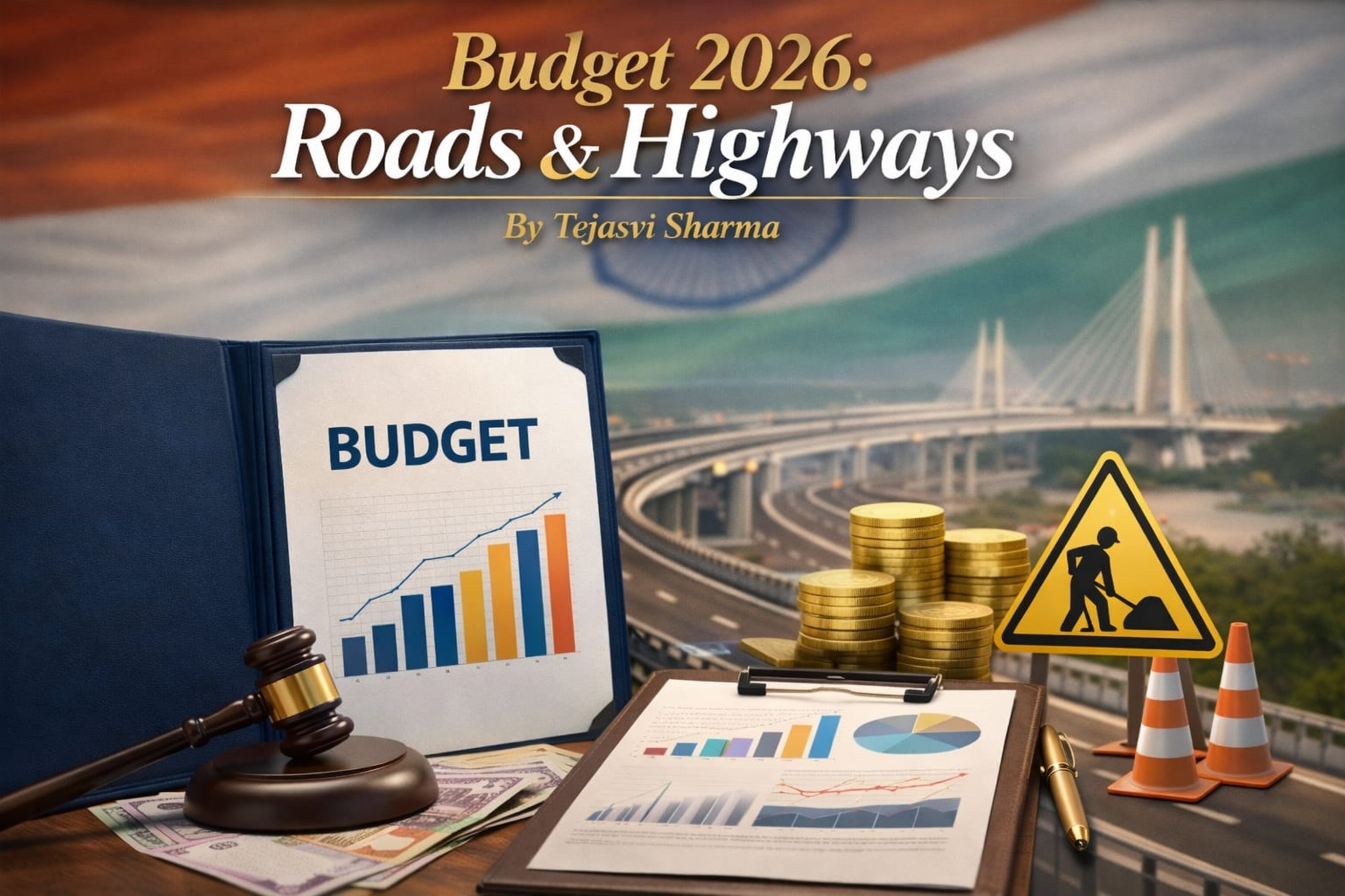
Driving India Forward: Roads & Highways in Budget 2026

by Tejasvi Sharma, Editor-in-Chief, EPC World
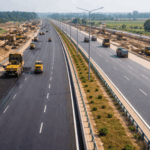
As Finance Minister Nirmala Sitharaman presented the Union Budget 2026–27, the narrative was clear — infrastructure isn’t just spending, it is strategy. At the heart of this strategic thrust lies one of India’s most potent drivers of economic transformation: roads and highways. For decades, road connectivity has been the sinew of India’s internal commerce, mobility and integration; in Budget 2026, it’s been given renewed fiscal focus and strategic intent.
Record Allocation: Numbers that Mean Movement
The total allocation for the Ministry of Road Transport and Highways (MoRTH) in FY 2026–27 stands at ₹3.10 lakh crore, a rise of about 8% from the ₹2.87 lakh crore earmarked in Budget 2025–26.
This incremental but sustained increase underscores the government’s commitment to continually deepen India’s road infrastructure footprint. Notably, MoRTH now accounts for approximately 6% of total central expenditure, keeping it among the highest-funded ministries — a testament to its strategic priority.
The National Highways Authority of India (NHAI) — the agency responsible for execution — also receives a substantial boost. Its allocation in the 2026 Budget has been increased to ₹1.87 lakh crore, up roughly 10% from last year’s ₹1.70 lakh crore.
FY21–FY27 Trend: Roadways funding has nearly tripled over the last five years, rising from under ₹1 lakh crore in FY 2021 to well above ₹3 lakh crore in FY 2027 — reflecting long-term prioritisation.
What Will the Money Build? Major Road & Highway Projects
1. Bharatmala Pariyojana Phase-II Expansion
The flagship Bharatmala Programme continues to absorb a significant portion of the allocation, financing:
- Greenfield expressways
- Economic corridors
- Port-connectivity highways
- Border and backward region links
Phase-II is designed to fill missing links and integrate far-flung clusters, catalysing trade flows and regional integration.
2. Greenfield Expressways Across Regions
Several new expressway corridors are expected to see accelerated development, including:
- Surat–Chennai Expressway: A major north–south corridor connecting Gujarat with Tamil Nadu, improving industrial logistics.
- Bengaluru–Vijayawada Expressway: Linking southern manufacturing hubs to eastern markets and ports.
Continued construction and expansion across other expressway deployments under PPP and Hybrid Annuity frameworks is also expected.
A strong underpinning of the Budget is to diversify corridor geography, ensuring highways don’t just link megacities but also underpin inter-regional equity.
3. Urban & Regional Connectors
While expressways grab headlines, the Budget also emphasises:
- Last-mile connectors
- Highways feeding ports and logistics parks
- Rural and tribal access roads
These are essential for unlocking local economic pools and reducing regional disparities — aligned with the government’s infrastructure decentralisation philosophy.
Strategic Drivers Beyond Capex
Debt Rationalisation & Asset Monetisation
One of the oft-understated priorities embedded within the 2026 allocation is fiscal consolidation within the highways ecosystem.
NHAI aims to bring its total debt below ₹2 lakh crore, lowering the leverage overhang that had peaked in recent years.
The Budget also targets ₹30,000 crore in asset monetisation, split equally between Toll-Operate-Transfer (ToT) vehicles and infrastructure investment trusts (InvITs).
This marks a strategic pivot — from purely spending to recycling capital and sustaining delivery engines over the long term.
Leadership & Policy Continuity: The Nitin Gadkari Effect
Union Road Transport and Highways Minister Nitin Gadkari has consistently emphasised that India’s infrastructural push is phase-wise and time-bound. Under his stewardship, reforms such as faster land acquisition, milestone-linked funding, digital execution tracking, and stronger contractor discipline have become institutional norms.
Budget 2026 reflects these priorities, blending financing, execution design, and sustainability into a coherent ecosystem.
Road Safety & Technology Integration
Alongside expansion, there is renewed emphasis on engineering safety retrofits, including:
- Median barriers
- Intelligent signboards
- Emergency response frameworks
- Pavement design reinforcements
Technology adoption — from Building Information Modelling (BIM) to digitised monitoring — is increasingly becoming standard, promising improved transparency and cost efficiency.
Roads in the Broader Growth Framework
Budget 2026 raises capital expenditure to ₹12.2 lakh crore, an 11–12% year-on-year increase, with nearly 47% flowing into transport infrastructure such as roads, railways and logistics.
This ensures roads integrate seamlessly with ports, multimodal logistics parks, industrial corridors, and urban transit strategies — forming a cohesive connectivity fabric.
Conclusion: Roads as the Nation’s Growth Trackpad
Budget 2026 does not merely fund road construction — it funds India’s mobility future. With ₹3.10 lakh crore for MoRTH and ₹1.87 lakh crore for NHAI, the message is clear: fast, modern, safe and economically integrated road networks are a strategic national priority.
As Minister Nitin Gadkari continues to steer one of India’s most consequential infrastructure portfolios, this Budget provides both the financial muscle and policy continuity to deliver roads that bridge not just distances, but opportunity, enterprise and inclusive growth.
Tags
Related Posts